
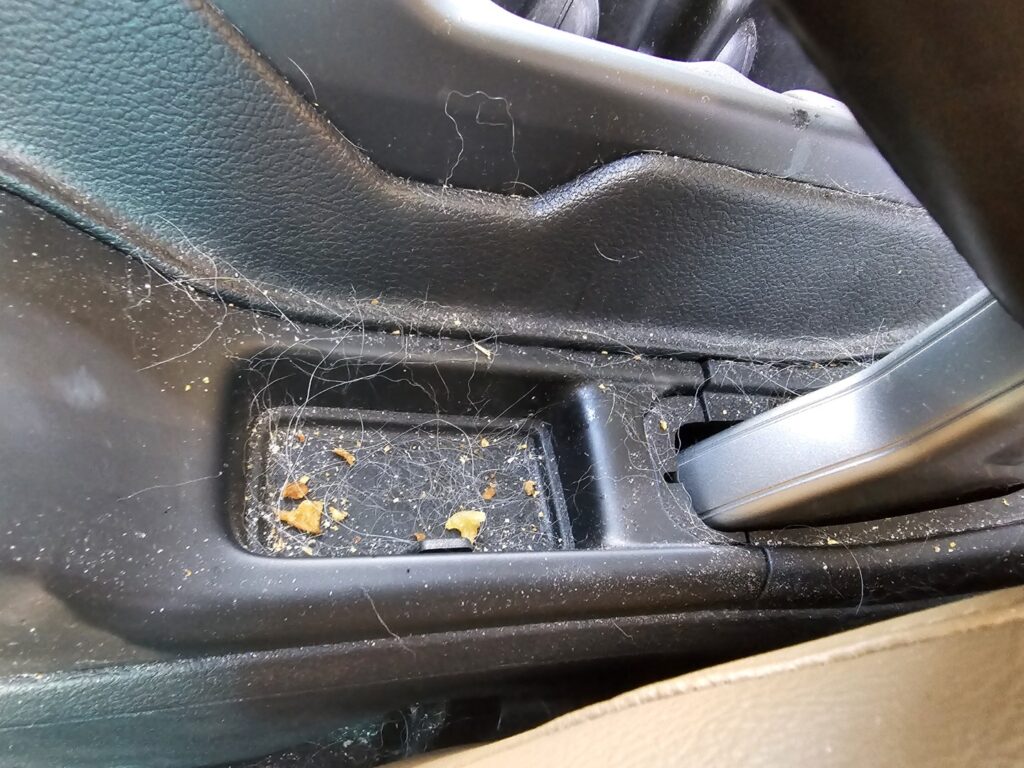
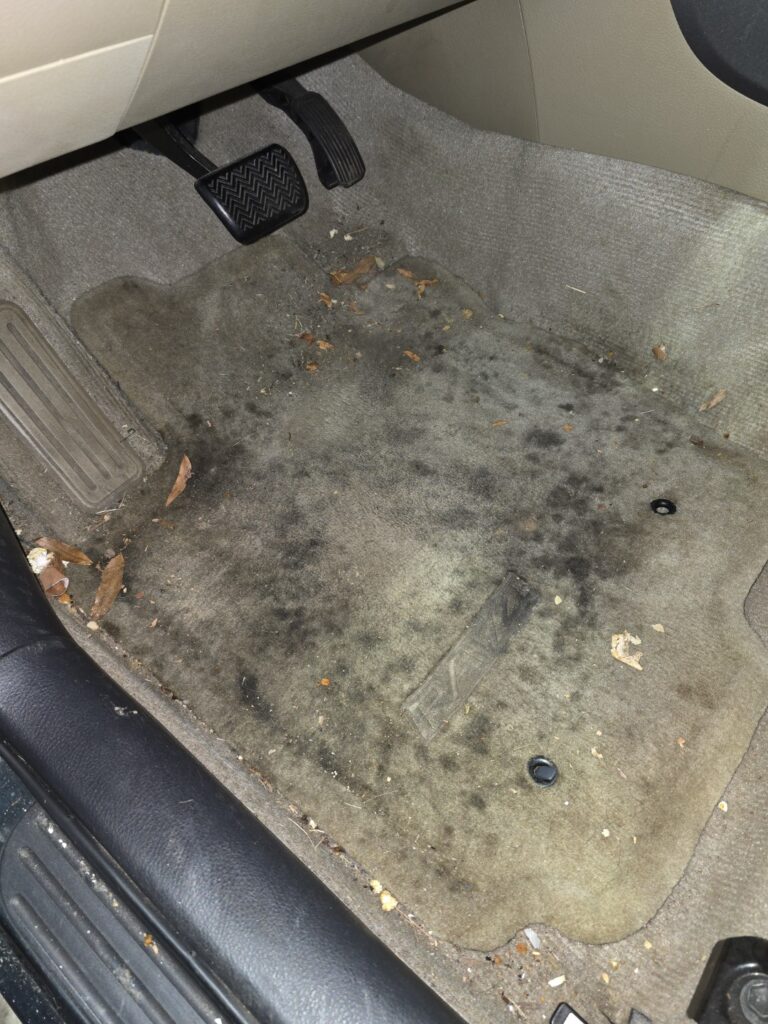
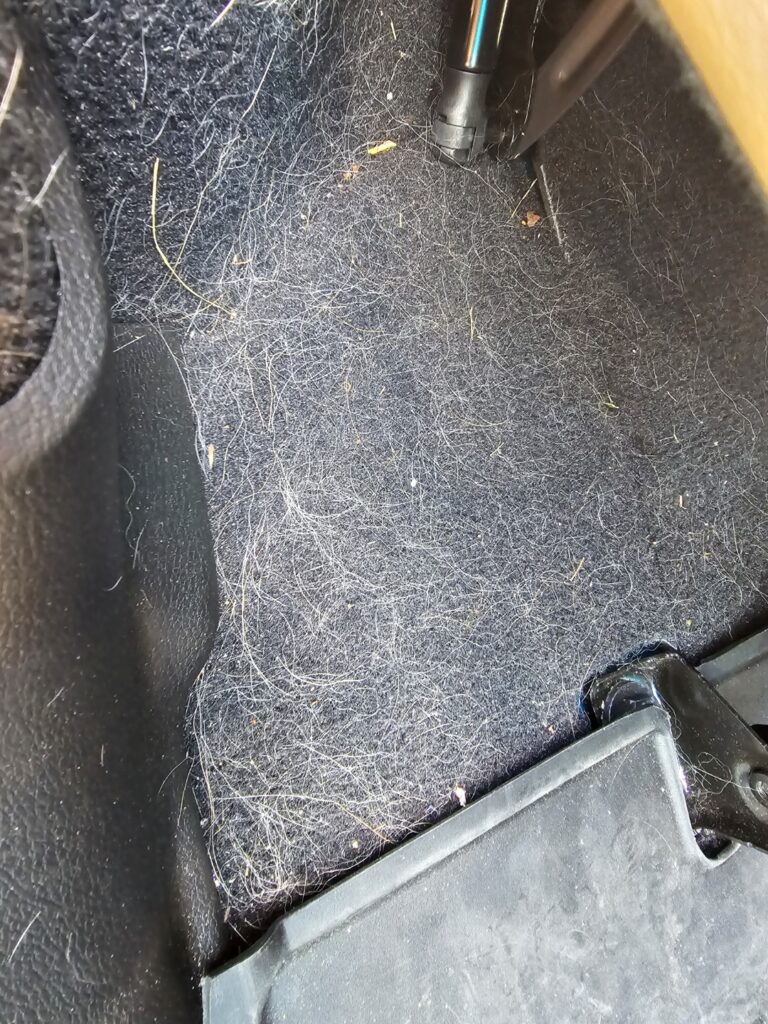
To get mold out of your car: vacuum the loose spores first (wear a mask), then find and dry the moisture source — mold can’t survive without it. Clean affected hard surfaces and fabric with a mold-safe cleaner, let everything dry fully (sunlight helps), and treat the air/vents so spores don’t resettle. For anything more than a small patch, a professional steam clean removes it at the root rather than just the surface. Here’s the full step-by-step, plus how to stop it from coming back.
Mold thrives in warm, damp environments, making the interior of your car a prime target for mold development. If moisture builds up inside your car due to wet weather, spills, or even excessive humidity, it can quickly lead to mold growth. Over time, mold can damage upholstery, carpet, and even your car’s mechanical parts. This is why it’s crucial to take action early and prevent moisture from accumulating in the first place.
Some products are specifically designed to keep mold at bay. These include:
Proper airflow is essential in preventing mold growth. When moisture is trapped in your car, it creates an environment ripe for mold. Always open your windows or sunroof to allow fresh air to circulate, especially after a rainstorm or if you’ve recently washed your car.
If you live in a humid climate, a portable dehumidifier can make a big difference. This device works by pulling moisture out of the air, helping to keep your car dry and prevent mold growth.
After a rainy day or after washing your car, take extra care to clean and dry the interior thoroughly. Pay special attention to the carpets, floor mats, and upholstery, as these areas can retain moisture.
Mold-resistant sprays and wipes can provide an added layer of protection. These products are designed to prevent mold from growing on your seats, dashboard, and carpets.
Silica gel packs are excellent for absorbing moisture. Place them in different corners of your car, especially under the seats or in the glove compartment, to help control humidity levels.
When possible, avoid parking your car under direct sunlight during the hot summer months, as this can increase the internal temperature and humidity. Instead, park in a shaded area or a garage to keep the temperature stable.
Moisture and dirt are a breeding ground for mold. After wet conditions, be sure to dry your car thoroughly. A clean, dry environment is the first line of defense against mold.
Detecting mold in your car early can save you from costly repairs and health risks. Here’s how to recognize the warning signs:
The most common sign of mold growth is a musty, damp smell that lingers in the cabin. If you notice this odor, it’s time to inspect for mold.
Look for dark spots or fuzzy growth on your car’s fabric or surfaces. This is often a sign that mold has already taken root.
Excess moisture inside the car can cause your windows to fog up. If this happens regularly, it could indicate that moisture is trapped inside, fostering mold growth.
If mold has already begun to grow in your car, it’s essential to remove it promptly to prevent further damage.
Start by removing all items from your car. Then, vacuum the affected areas to remove loose mold spores.
Use a mixture of water and vinegar or a store-bought mold cleaner to scrub the affected surfaces. Make sure to target seats, carpets, and any other areas where mold is visible.
Once the mold is removed, make sure your car is completely dry. Use fans, air conditioning, or a dehumidifier to speed up the drying process. Afterward, disinfect the surfaces to kill any remaining mold spores.
During rainy or wet seasons, your car is more likely to encounter damp conditions. Always dry the interior after exposure to wet weather and ensure your car is properly ventilated.
In hot weather, humidity can build up quickly inside your car. Use silica gel packets or dehumidifiers and avoid leaving your car windows closed for extended periods.
Mold not only damages your car’s interior but also affects air quality and can lead to respiratory issues. Mold spores can trigger allergic reactions or more severe health problems, especially in individuals with asthma or weakened immune systems.
A moldy car loses its resale value significantly. Potential buyers may be turned off by visible mold or the musty odor. Mold damage, if left untreated, can also result in costly repairs, further reducing your car’s value.
If the mold covers more than a small patch, keeps coming back, or has left a musty smell you can’t get rid of, surface cleaning usually isn’t enough — the spores and the odor are embedded in the padding under your carpet and seats. That’s what our Signature Interior Deep Clean and Odor Removal services are built for: we steam-clean and treat the source, not just the surface, so it doesn’t return. We’re in Clarksburg and serve all of Montgomery County.
Regular cleaning is crucial. It’s recommended to clean your car at least once a month, and more often if you live in a humid climate or during the rainy season.
While bleach can kill mold, it’s not the best option for car interiors due to its strong odor and potential to damage fabrics. Instead, use vinegar or a specialized mold remover.
Symptoms can include sneezing, coughing, eye irritation, and respiratory issues. If you experience these symptoms, consult a doctor.
Yes, many cleaning products are designed to prevent mold growth, including sprays and wipes specifically formulated for car upholstery.
Ensure your car stays dry by drying the interior after exposure to rain and using moisture-absorbing products like silica gel packs.
Yes, with the right products and regular maintenance, you can prevent mold growth without needing professional services.
Preventing mold in your car requires proactive care, from proper ventilation and regular cleaning to using the right products. By following the tips in this guide, you can ensure that your car remains a healthy and comfortable environment.