
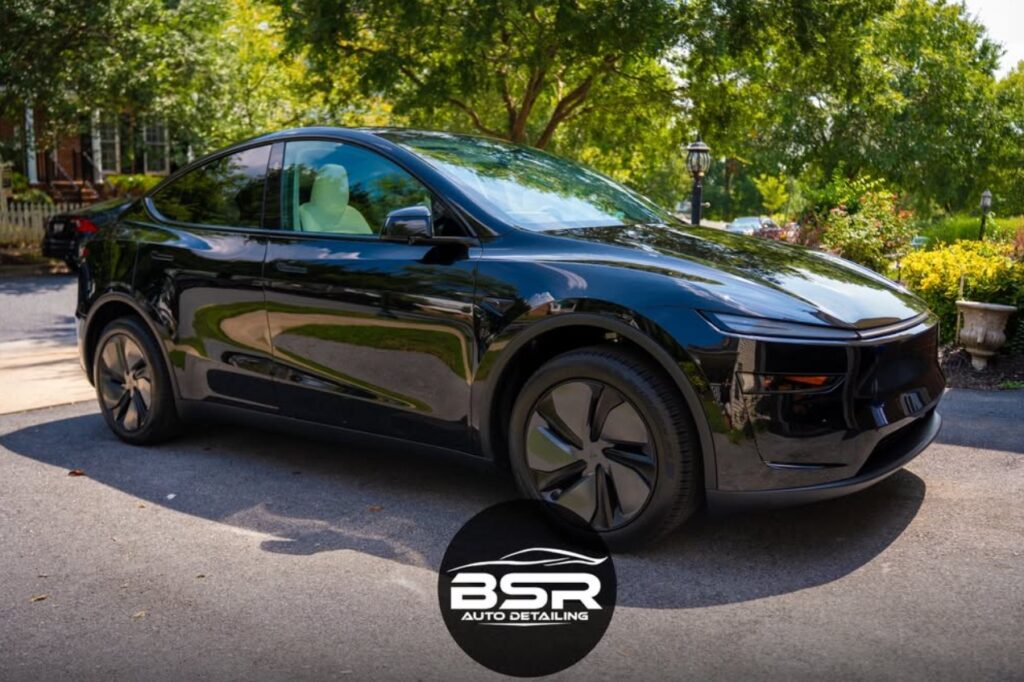
Tesla, Rivian, and other EV owners across Montgomery County ask us some version of the same question: does ceramic coating work differently on an electric vehicle? The coating chemistry itself doesn’t change, but the paint underneath it often does — and that difference matters more than most owners realize before their first detail.
EV Clear Coats Tend to Be Softer
Several EV manufacturers, Tesla included, have built a reputation for thinner, softer clear coats compared to traditional automakers. Softer clear coat means it marks up faster from normal contact: wash mitts, automatic car washes, even wiping down the car with the wrong towel can leave swirl marks that show up clearly in direct sunlight. If you’ve noticed your Tesla looking “scratched up” faster than a gas-powered car you’ve owned, this is usually why.
This isn’t a flaw exactly — it’s a tradeoff manufacturers make for other priorities — but it means EV paint needs more careful handling from day one, and it makes proper paint correction before coating even more important than usual.
Panoramic Glass and Unusual Panel Shapes Change the Job
Tesla’s oversized windshields and panoramic roofs, along with the flush door handles and unique panel gaps on most EVs, change how a detailer approaches both correction and coating application. Glass roofs need careful masking and, often, their own coating treatment since they’re exposed to the same UV and contamination as paint. Panel edges and gaps on EVs tend to be tighter, which changes how products are worked into those areas during application.
Why New Doesn’t Mean Defect-Free
Because EV paint marks easily, it’s common for a brand-new Tesla or Rivian to already show light swirling and marring straight off the delivery truck — sometimes from the transport process itself, sometimes from a rushed pre-delivery wash at the dealership. Coating over those defects without correcting first just locks in the imperfections under a glossy layer instead of fixing them. If you want your EV’s paint to actually look as good as it can, a paint correction pass before coating is the step that makes the biggest visible difference.
What This Means for Maintenance After Coating
Once coated properly, EVs benefit the same way any car does — water beads and sheets off, contaminants don’t bond as aggressively, and washing becomes easier. But because the underlying clear coat is softer, maintenance technique still matters more long-term. Hand washing with proper microfiber, avoiding brush-style automatic washes, and being mindful during any wipe-downs all help protect the coating and the paint beneath it.
Getting It Right the First Time
We’ve worked on Teslas and other EVs from across the DMV specifically because owners want someone who understands these paint quirks rather than treating an EV exactly like any other car. If you’re considering ceramic coating for a Tesla, Rivian, or any EV, starting with an honest assessment of the paint’s current condition is the right first move.
See our Ceramic Coating page or call 877-543-1085 to talk through what your specific EV’s paint needs before coating.