
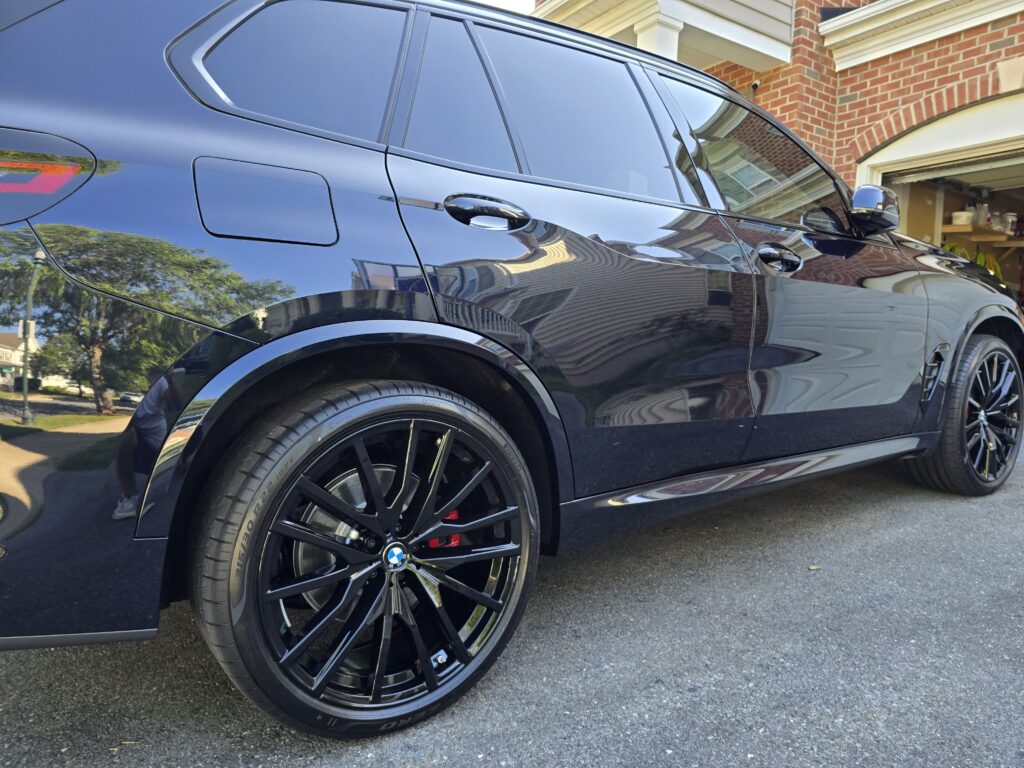
When customers hear that a paint correction job might take two to five days, the instinct is often to wonder if that’s a long time for “just polishing a car.” It’s a reasonable question, but the timeline isn’t a sign of inefficiency. In most cases, it’s the opposite — a longer, more careful process is exactly what produces a result worth paying for.
Where the Time Actually Goes
The polishing step itself is usually one of the quicker parts of the job. The bulk of the time goes into everything around it: a thorough wash and decontamination to strip away embedded grime, iron deposits, and tar; a clay bar or chemical decontamination pass to pull out anything bonded to the surface that washing alone won’t remove; careful inspection under proper lighting to map out exactly where the defects are and how deep they go; and only then the actual cutting and polishing stages, often done in multiple passes with different pads and compounds depending on the paint’s condition.
If correction is being done before a ceramic coating, there’s also a final panel wipe step to remove any polishing oils before the coating can properly bond, which adds its own time on top of the correction itself.
Why Rushing This Process Backfires
A correction job that gets compressed into a couple of hours usually means some of those steps got skipped or shortened. Skipping proper decontamination risks dragging contaminants across the paint during polishing, which can introduce new scratches instead of removing old ones. Rushing the inspection step means defects get missed or under-corrected. And rushing the polishing stages themselves increases the risk of burning through too much clear coat in problem areas, or leaving holograms and uneven gloss behind, which is a common giveaway of a rushed, lower-quality job.
What a Longer Timeline Usually Means for the Result
Cars with heavier swirling, deeper scratches, or years of neglected washing simply need more correction stages to actually fix, and each stage takes real time to do safely. A two-to-five day timeline on a more involved job typically reflects multiple polishing passes, careful panel-by-panel inspection between stages, and the patience to stop refining once the paint is actually corrected rather than just “good enough to hand back.”
How to Think About Turnaround When Comparing Quotes
If two shops quote wildly different timelines for what sounds like the same job, that’s worth asking about directly. A same-day “full paint correction” on a car with real swirling and scratching is a red flag more often than a sign of efficiency. The shops doing thorough work tend to need the time that thorough work actually requires.
Plan Ahead, and Expect It Done Right
Because correction is genuinely time-intensive when done properly, we recommend booking ahead rather than expecting a same-day slot for anything beyond a basic Level 1 polish.
See our Level 2 Paint Correction page or call 877-543-1085 to get a realistic timeline based on what your car’s paint actually needs.