
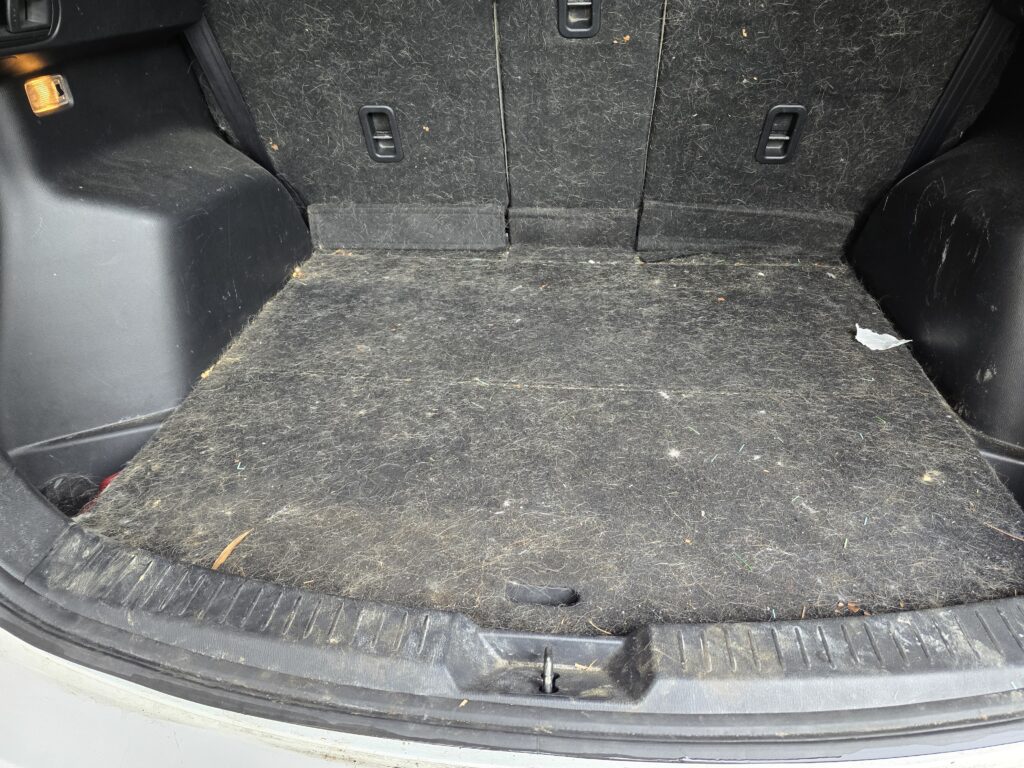
If you drive your dog anywhere regularly — vet trips, trail runs, weekend errands — you already know what happens to your back seat over time. Pet hair works its way into seat fabric and carpet fibers, and that distinctive dog smell builds up gradually until one day you get in the car and it hits you before you’ve even started the engine. Both problems are solvable, but they require different approaches, and most DIY attempts only address one of them at a time.
Why Dog Smell Is Harder to Remove Than It Seems
The odor isn’t just surface-level. Dog smell comes from a combination of dander, saliva, oils from the coat, and in some cases urine or muddy paw residue that soaked into carpet padding or seat foam before it was ever cleaned up. Spraying a fabric freshener or leaving a dryer sheet in the car masks the smell temporarily but doesn’t touch what’s causing it. The odor source is usually sitting in material layers you can’t reach with a standard vacuum or wipe-down.
The only approach that actually eliminates pet odor rather than covering it is extraction — a hot water extractor or steam cleaner that forces cleaning solution deep into upholstery and carpet fibers and then pulls the contaminated material back out. This is why a thorough interior detail with proper extraction equipment produces results that weeks of air fresheners can’t.
Why Pet Hair Is Its Own Problem
Pet hair is stubborn in a specific way: it doesn’t just sit on top of fabric, it weaves into it. A standard vacuum with a basic attachment will pull up loose surface hair but leave the embedded strands behind. Dedicated pet hair removal involves a combination of specialized rubber tools that lift the hair by creating friction, followed by thorough vacuuming, often repeated across multiple passes depending on how long the hair has been accumulating.
Longer, finer hair from breeds like golden retrievers or huskies tends to be the most difficult since it works deeper into woven fabric. Short, coarse hair from breeds like labs or boxers can be easier to lift but tends to stick in larger quantities across more surface area.
What a Professional Interior Clean Does That DIY Can’t
A professional interior detail addresses both problems in the right order: pet hair removal first, followed by a full vacuum, then steam or hot water extraction of all fabric surfaces, and finally an odor-neutralizing treatment applied to the areas most affected. The combination of professional-grade extraction equipment and proper odor-neutralizing chemistry gets to the source in a way consumer products simply aren’t designed to reach.
For cars with significant odor that’s been building up over months or years, an ozone treatment after the detail can eliminate residual smell from the areas even extraction can’t fully reach.
When DIY Is Enough and When It Isn’t
If your dog rides occasionally and you’re cleaning up after each trip, consistent vacuuming with a rubber pet hair tool and prompt cleanup of any wet paw mess will keep things manageable. If the smell is already noticeable to people who don’t own a dog, or the hair is embedded across multiple surfaces, a professional extraction detail is going to get you back to baseline faster and more completely than any amount of at-home effort.
We handle pet hair and odor removal regularly — it’s one of the most common reasons people come to us for an interior clean in Montgomery County.
See our Deep Interior Clean page or call 877-543-1085 to get your car smelling like a car again.