
Short answer: In most cases, yes. Multi-stage paint correction can remove swirls, oxidation, sanding marks, and light-to-moderate scratches from old, neglected paint without a repaint — as long as there’s enough paint or clear coat left to work with. It does this by leveling a microscopic amount of the surface to erase the defects, rather than covering them. Very deep scratches that have gone through the paint still need touch-up or respray, so a professional measures the paint first. When the correction is finished, sealing it with a ceramic coating protects the restored finish for years. We recently did exactly this on a 1987 Pontiac Firebird, and the result came out better than new.
The project: a 1987 Pontiac Firebird
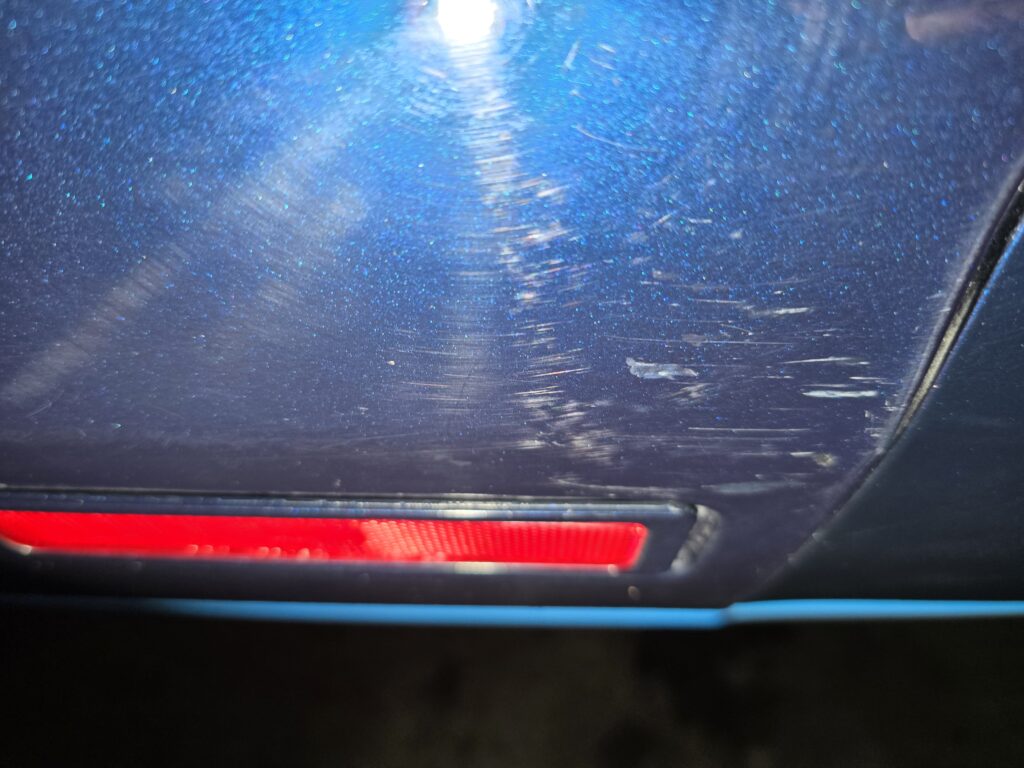
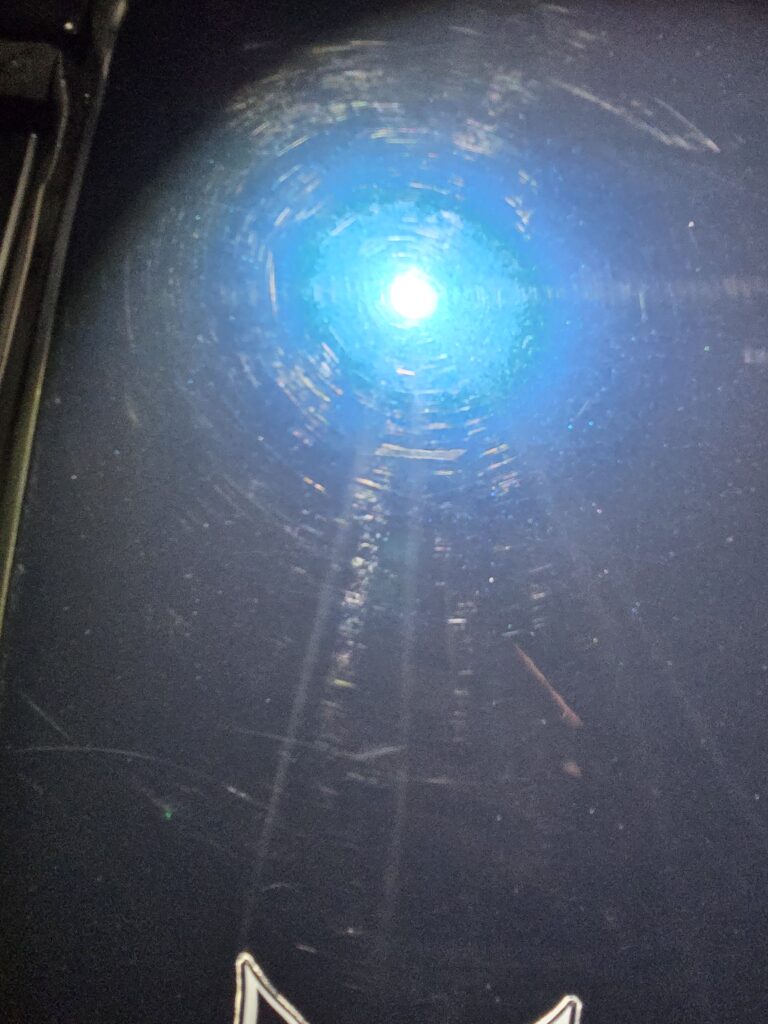
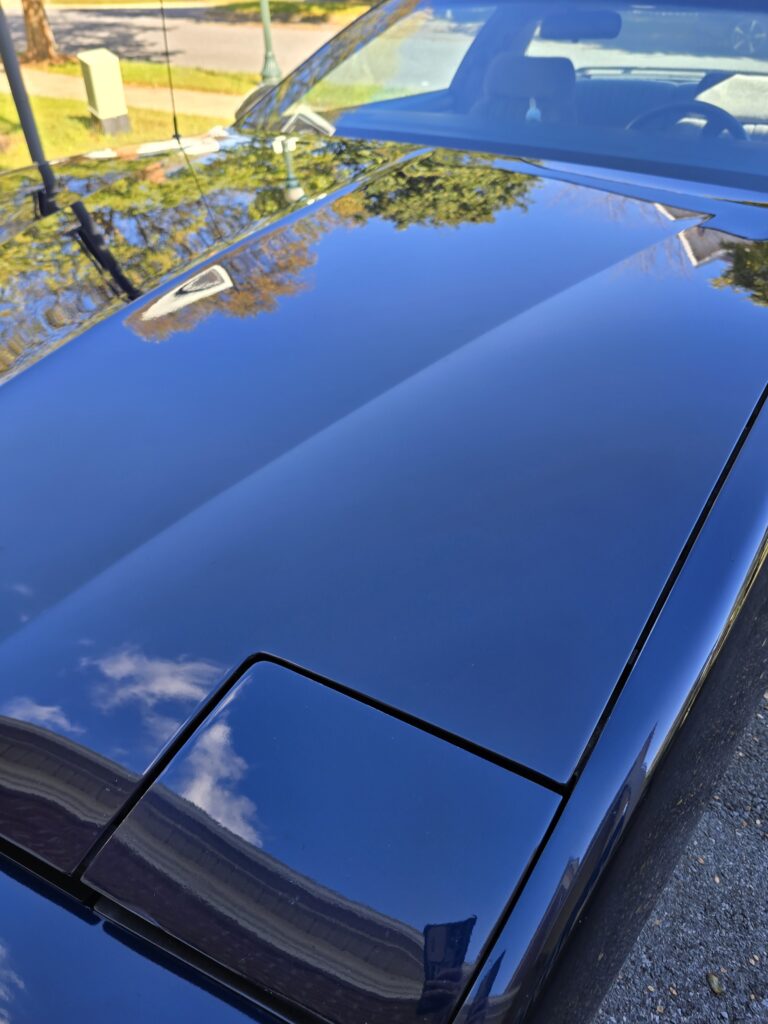
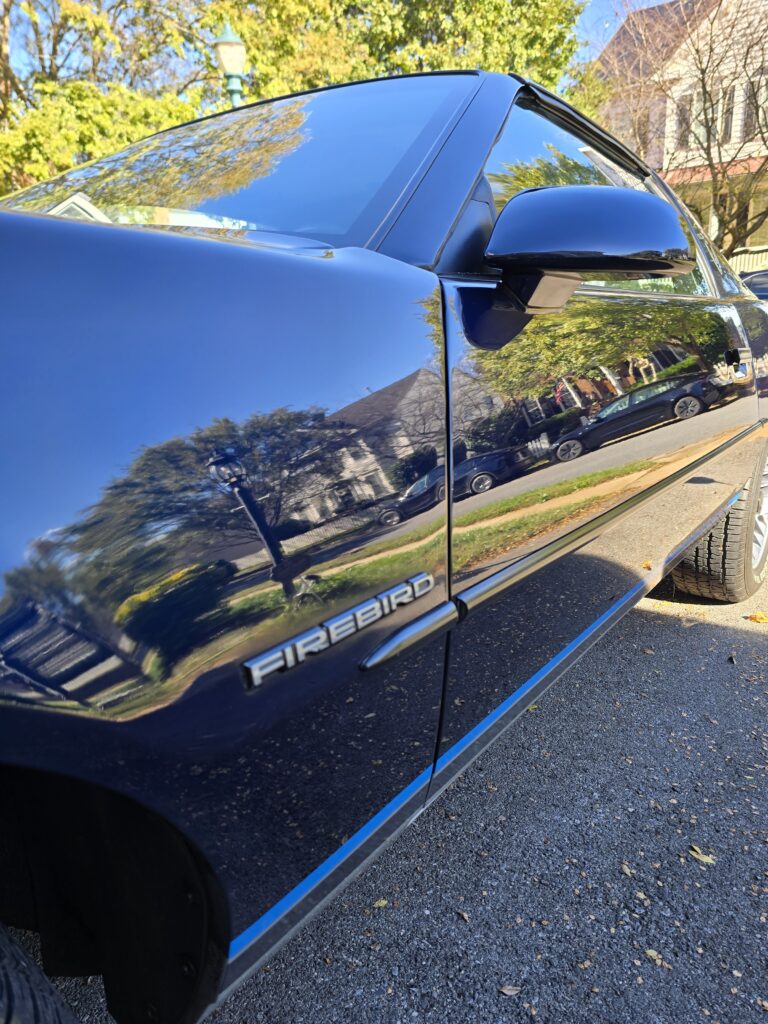
This Firebird came into our Clarksburg studio with serious paint problems — heavy defects, scratches, and sanding marks across the body. It’s the kind of paint most people assume is beyond saving without a full repaint. We assessed the paint, then performed a two-step (Level 2) paint correction: a cutting stage to remove the deeper defects, followed by a polishing stage to refine the finish to a deep, clear gloss.
Once the paint was corrected, we applied an 8-year ceramic coating to lock in the result and protect it going forward. Inside, the car got a deep interior clean, including hot-water extraction to lift coffee staining out of the carpets and seats, so the cabin felt as new as the exterior. The owner was ecstatic — he told us the car didn’t even look this good when he bought it back in 1987. That’s the goal with a classic: not just clean, but better than the day it rolled out.
What is two-step (Level 2) paint correction?
Two-step correction is a professional, two-stage process. The first stage uses a cutting compound to remove the heavier defects — deep swirls, oxidation, scratches, and sanding marks. The second stage uses a finer polish to refine the surface and restore clarity and gloss, removing any haze the cutting stage left behind. The result is a finish that’s genuinely corrected, not temporarily filled. A single-stage correction (Level 1) enhances and adds gloss; a two-step is for paint with real, visible damage like this Firebird had.
Can paint correction remove deep scratches and sanding marks?
Paint correction works by removing a microscopically thin layer of the surface to bring it level with the bottom of a defect — which is why it erases swirls, oxidation, water spots, sanding marks, and light-to-moderate scratches so effectively. The honest limit is depth: a scratch you can catch a fingernail in has usually gone through the clear coat or paint, and that can’t be fully polished out without risking the paint. Those need touch-up or a respray of the panel. This is also why experienced detailers measure paint thickness before correcting, and why older cars get assessed carefully — many 1980s vehicles used single-stage paint, which is corrected differently than modern clear-coat finishes but can come up beautifully in the right hands.
Why ceramic coating after correction?
Paint correction removes a thin layer of the finish to restore it, so the freshly corrected paint is at its best — and worth protecting. A ceramic coating applied right after correction locks in that work, shields it from UV, and keeps the gloss and the easy-clean surface for years. For a classic or a car someone cares about, this pairing is the standard: correct the paint to make it flawless, then coat it to keep it that way. On this Firebird, the 8-year coating means the restoration holds up long-term instead of slowly re-oxidizing.
Is paint correction worth it on an older or classic car?
For most classic owners, yes — and often more so than a repaint. Correction preserves the car’s original paint, which matters for a classic’s character and value; collectors and enthusiasts generally prize original paint over a respray. It’s also typically less expensive than a quality repaint and avoids the color-match and masking issues that come with repainting panels. The one real constraint is how much paint remains to work with. When there’s enough, correction brings a tired finish back to life while keeping it authentically the car’s own.
Frequently asked questions
Can old, oxidized car paint be restored?
Usually yes. Paint correction removes oxidation and the defects beneath it to restore gloss and clarity, as long as enough paint or clear coat remains. Severely degraded paint that has worn through may need repainting.
Does paint correction remove scratches?
It removes swirls, oxidation, sanding marks, and light-to-moderate scratches that sit within the clear coat or paint. Deep scratches that have gone all the way through the paint can’t be fully corrected and need touch-up or respray.
Is paint correction better than repainting a classic car?
For preserving originality and value, usually yes. Correction keeps the car’s original paint and costs less than a quality respray, as long as there’s enough paint left to correct. A repaint is only necessary when the paint is too thin or too damaged to save.
How long will the results last?
Paint correction results last as long as the paint stays protected and properly maintained. Sealing the corrected finish with a ceramic coating — an 8-year coating in this Firebird’s case — protects it from UV and contaminants so it holds the restored look for years rather than slowly re-oxidizing.
Classic car paint restoration in Clarksburg, MD
BeyondShowroom is an owner-operated detailing studio in Clarksburg, Maryland, serving Germantown, Damascus, Gaithersburg, and all of Montgomery County since 2018. We specialize in paint correction and ceramic coating for everything from daily drivers to classics — restoring tired, defect-ridden paint to better-than-new and protecting it for the long haul. With 100+ five-star Google reviews, your car is in careful hands. See our paint correction service or call 877-543-1085 for an assessment.